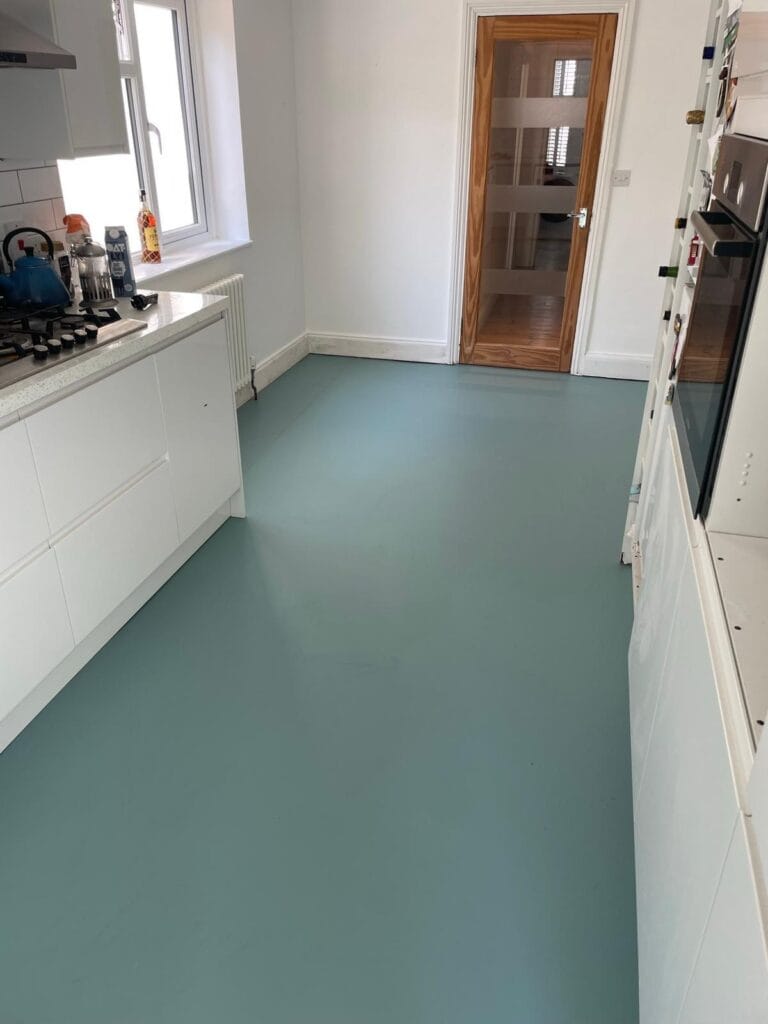
Best Flooring for Kitchens: A Fitter’s Honest Guide
Best Flooring for Kitchens: A Fitter’s Honest Guide
<
Kitchens are the hardest room in the house to floor well. They get wet, they get hot, they get dropped things — and they get judged by anyone who walks through the front door. Choose the wrong material and you’ll be replacing it within a few years. Choose right and you won’t think about it again.
I’ve fitted flooring in hundreds of kitchens across London, Essex, the M4 corridor and South Wales. In this guide I’ll tell you exactly what works, what doesn’t, and what I’d put in my own kitchen — no brand sponsorship, no filler.
Not sure about LVT vs laminate? Read our honest comparison
What Makes a Good Kitchen Floor?
Before comparing materials, you need to know what you’re actually asking the floor to do. In a kitchen, the non-negotiables are:
- Water resistance — spills, steam from cooking, the washing machine if it’s in there
- Ease of cleaning — grease, food, mud from the back door
- Durability underfoot — kitchens get more foot traffic than anywhere else in the home
- Comfort — you stand in a kitchen for long stretches; hard, unforgiving floors punish your back and knees
Most flooring types score well on some of these and poorly on others. Here’s how the main contenders stack up.
LVT (Luxury Vinyl Tile) — The Best All-Rounder
If I had to pick one material for a kitchen and never think about it again, it would be LVT.
Why it works so well:
- 100% waterproof — the core doesn’t swell even if water sits on it
- Warm and slightly cushioned underfoot (much kinder than tile or stone)
- Available in wood and stone looks that genuinely fool visitors
- Compatible with underfloor heating
- Easy to clean — no grout lines to harbour grease
The downsides: LVT can be scratched by heavy dragged furniture, and very cheap versions can look plasticky up close. Spend a little more on a reputable brand (Karndean, Amtico, Polyflor) and you won’t have that problem.
Best for: Most kitchens — especially open-plan spaces where the floor continues from living area into kitchen, as LVT keeps the look consistent throughout.
View our vinyl and LVT flooring options
Sheet Vinyl — The Practical Budget Option
Sheet vinyl gets unfairly dismissed as “old fashioned,” but modern sheet vinyl is a genuinely smart kitchen choice, particularly if budget is a consideration.
Why it works:
- Completely seamless — no joins means no places for water to get underneath
- Soft and warm underfoot
- Very easy to clean
- Inexpensive to supply and fit
The downsides: Sheet vinyl doesn’t have the high-end visual appeal of LVT or engineered wood, and it can be damaged by heavy furniture legs or sharp objects. It also can’t be sanded or repaired — if it’s damaged, you replace it.
Best for: Rental properties, utility kitchens, or anywhere you want a hardwearing, watertight floor at a sensible price.
Laminate — Good, But Know the Limitations
Laminate is one of the most popular floor types in the UK, and with good reason — it looks great, it’s affordable, and it’s easy to fit. But in a kitchen, you need to be careful.
Standard laminate is not waterproof. The core is wood-fibre based and will swell if water gets underneath — and in a kitchen, it eventually will. Around sinks, dishwashers and back doors in particular, water finds its way in over time.
The exception: Waterproof laminate (sometimes called “aqua-proof” or “hydro-resistant” core) is a different product. It uses a water-resistant core that won’t swell in normal kitchen conditions. If you want laminate in a kitchen, this is what you should specify.
Best for: Lower-traffic kitchens with careful users, or where budget doesn’t stretch to LVT but you want the wood-plank look.
Explore our laminate flooring range
Engineered Wood — Beautiful, But Handle With Care
Engineered wood is a real wood product with a hardwood veneer top layer on a stable plywood core. It looks stunning in a kitchen and adds genuine value to a home.
However, wood and water are still uneasy bedfellows. Engineered wood handles normal kitchen humidity and the occasional splash well, but a poorly sealed dishwasher or a flooding washing machine can cause real damage.
Key considerations:
- Ensure all joints are sealed during fitting to reduce water ingress risk
- Keep the floor well maintained — reseal periodically
- Not suitable if you have pets that drink messily or children who spill frequently
Best for: Higher-end kitchen renovations where aesthetics matter and the kitchen is relatively dry in use.
See our engineered wood flooring options
Porcelain and Ceramic Tile
Tile is the classic kitchen floor — almost every kitchen had it at some point. It’s completely waterproof, hygienic, and can last decades if fitted correctly.
The downsides are real though:
- Cold and hard underfoot — uncomfortable to stand on for long periods
- Grout lines gather dirt and are a pain to keep clean
- Unforgiving if you drop anything — glasses, plates, even phones won’t survive
- Professional fitting is essential for a good result; badly laid tile looks worse than any other floor type
Best for: Kitchens with underfloor heating (tile conducts heat brilliantly), or where a very traditional or Mediterranean look is the aim.
My Recommendation by Kitchen Type
| Kitchen Type | Recommended Flooring |
|---|---|
| Open-plan kitchen/living area | LVT — consistent look throughout |
| Traditional farmhouse kitchen | Engineered wood or stone-effect LVT |
| Rental or budget renovation | Sheet vinyl or waterproof laminate |
| Family home with kids and pets | LVT (waterproof, scratchproof, soft) |
| Luxury kitchen renovation | Engineered wood or large-format tile + UFH |
| Small galley kitchen | Sheet vinyl (seamless, easy to clean) |
FAQ
What is the most waterproof kitchen flooring?
Sheet vinyl and LVT are the most waterproof options. Sheet vinyl is completely seamless so water cannot get beneath it. LVT has a 100% waterproof core. Both will handle spills, steam and splashes without any damage.
Can I put laminate in a kitchen?
Standard laminate is not recommended for kitchens as the wood-fibre core will swell with water. If you want laminate, specify a waterproof or aqua-proof core product, and ensure it is fitted and sealed correctly around edges and doorways.
Is LVT or tile better for kitchens?
LVT is warmer, softer underfoot and easier to clean (no grout lines). Tile is cooler and harder but can last longer and conducts underfloor heating better. For most modern kitchens with active families, LVT is the more practical choice.
How long does kitchen flooring last?
Installed correctly: sheet vinyl 10–15 years, LVT 20–25 years, laminate 10–15 years, engineered wood 25+ years (if maintained), porcelain tile 30+ years. Poor fitting significantly reduces lifespan on every material.
Can kitchen flooring go over existing tiles?
In many cases, yes — LVT and vinyl can be laid over existing tiles if they are flat, secure and in good condition. This avoids costly tile removal. Always check the height difference at doorways and against appliances before going ahead.
Ready to Choose Your Kitchen Floor?
Getting the material right is only half the battle — fitting it correctly to avoid water ingress, level out any subfloor imperfections, and get clean cuts around kitchen units is where the real skill lies.
CountryLife Flooring fits all types of kitchen flooring across London, Essex, the M4 corridor and South Wales. We offer free, no-obligation quotes and honest advice — no pressure to upgrade, no upselling.
Similar Posts
LVT vs Laminate Flooring: An Independent Fitter’s Honest Guide
👇 Updated & expanded: we’ve rewritten this into a fuller comparison that also covers engineered wood. Read the latest version — LVT vs Laminate vs Engineered Wood → Skip to content COUNTRYLIFE. Carpets Vinyl Laminate Engineered Wood Reviews More ▾ ProjectsGuidesContactFAQs 07852 827 199 Free quote → ☰ Carpets Vinyl Laminate Engineered Wood Reviews ProjectsGuidesContactFAQs…