Best Flooring for Pets: What Actually Holds Up
Best Flooring for Pets: What Actually Holds Up
<
If you have dogs or cats, your floor takes a beating. Claws scratch, accidents happen, muddy paws come in from the garden — and the wrong floor will show every bit of it within months.
I’ve fitted flooring in homes with everything from a single house cat to three Labradors. The difference in what survives and what doesn’t is stark. This is the honest version — the advice I’d give a friend rather than a showroom sales pitch.
View our waterproof vinyl and LVT options
What to Look for in Pet-Friendly Flooring
When you have pets, you need a floor that handles four specific problems:
- Scratches — claws, especially from larger dogs, will mark soft surfaces
- Accidents — urine soaking into floors causes lasting damage and odour
- Moisture — wet paws, water bowls tipped over, muddy dog
- General wear — a dog that runs laps of the house is putting the floor through its paces every day
No floor is completely immune to all four. But some handle them far better than others.
LVT (Luxury Vinyl Tile) — The Best Choice for Pet Owners
LVT is the material I recommend most often to pet owners, and there’s a clear reason for it: it handles all four of the problems above better than anything else in its price range.
How it handles pet life:
- The wear layer on quality LVT (0.55mm or above) is genuinely scratch-resistant for most dogs. Cat claws and smaller dog breeds cause minimal marking.
- Completely waterproof — urine, water bowl spills and muddy paws wipe clean. Crucially, accidents don’t soak into the core and cause odour or swelling.
- Warm and comfortable underfoot for pets resting on it
- Easy to mop and disinfect
The honest caveat: Large, heavy breeds with long claws (think German Shepherd, Husky, Labrador) can mark even good-quality LVT over time. Keep claws trimmed and it significantly reduces this risk.
Recommended: Look for LVT with a wear layer of 0.55mm or more. Brands like Karndean, Amtico, and Polyflor produce ranges specifically designed for high-traffic, active households.
Explore LVT and vinyl flooring options
Sheet Vinyl — Underrated for Pet Households
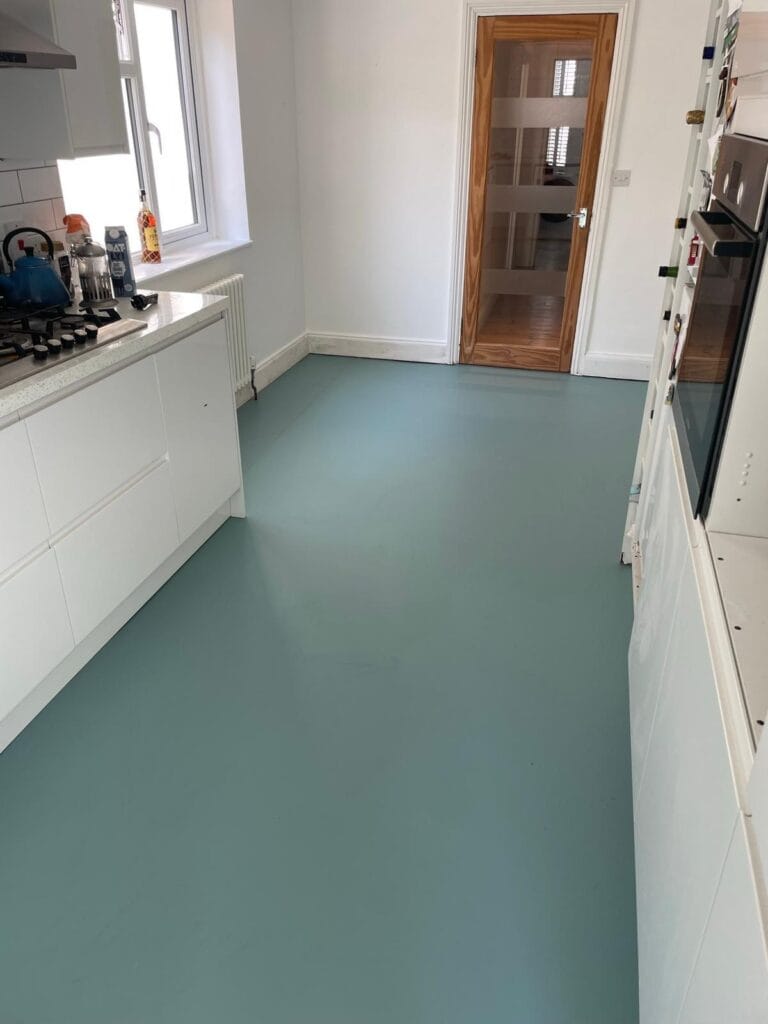
Sheet vinyl doesn’t get the credit it deserves from pet owners. Because it’s seamless — no joins — there’s literally nowhere for pet urine to seep underneath. That makes it one of the best choices if accidents are a regular occurrence (puppies, elderly dogs).
Advantages for pet owners:
- Zero seams = zero places for moisture to get underneath and cause damage or smell
- Soft and warm — pets tend to like it
- Very easy to clean and disinfect
- Inexpensive, so if it does get damaged, replacing it isn’t a significant cost
The limitations: Sheet vinyl has less visual appeal than LVT, and cheaper versions can scuff and dull over time. It also can’t be repaired — damage means replacement.
Best for: Puppy households, multi-dog homes, or anywhere you want maximum waterproofing without a high material cost.
Laminate — Proceed With Caution
Laminate is a popular choice, but it’s not ideal for pet owners and it’s important to understand why.
The core issue is water. Standard laminate has a wood-fibre core that swells when moisture gets in — and with pets, moisture always gets in eventually. Dog urine in particular, if it seeps through the joins, causes irreversible swelling and a persistent odour that cannot be cleaned out. The affected boards have to be replaced.
If you have your heart set on laminate:
- Specify a waterproof or aqua-proof core laminate — these have a different core construction that won’t swell
- Ensure the floor is fitted with tight joins and sealed at edges
- Act fast if accidents happen — blot immediately, don’t let it sit
For a home with very clean, well-trained dogs or cats only, standard laminate can work. For puppies or dogs prone to accidents, I’d steer away.
See our laminate flooring options
Engineered Wood — Beautiful But Vulnerable
Engineered wood looks stunning and adds real value to a home, but it requires an honest conversation when pets are involved.
The challenges:
- Dog claws will scratch engineered wood over time — particularly in high-traffic areas like hallways
- Urine is highly damaging if it soaks in — it stains the wood, causes swelling, and creates a smell that cannot be removed
- Damp mop cleaning only — you can’t use excessive water on wood
When it can work: Homes with cats or very small, well-trained dogs where accidents are genuinely rare. The wood can be sanded and refinished to remove surface scratches — something you can’t do with any other floor type. But that’s a maintenance requirement, not a selling point.
For most pet-owning households, I’d recommend LVT over engineered wood unless aesthetics are the absolute priority.
Engineered wood flooring — what to know
Carpet — The Honest Assessment
Carpet and pets is a difficult combination that many people choose for comfort reasons and regret for practical ones.
Pet hair embeds into carpet pile, pet odours absorb into the backing, and urine — once it reaches the underlay — is almost impossible to fully remove. Professional cleaning helps, but it doesn’t reverse the damage.
If you have pets and want carpet, restrict it to bedrooms or rooms the pets don’t access. In living rooms, hallways and anywhere pets spend time, a hard floor is a far more practical choice.
Quick Comparison: Pet-Friendliness by Floor Type
| Flooring | Scratch Resistance | Waterproof | Odour Resistance | Best For |
|---|---|---|---|---|
| LVT (0.55mm+) | ★★★★☆ | ★★★★★ | ★★★★★ | Most pet households |
| Sheet Vinyl | ★★★☆☆ | ★★★★★ | ★★★★★ | Puppy/accident-prone homes |
| Waterproof Laminate | ★★★★☆ | ★★★☆☆ | ★★★☆☆ | Well-trained dogs |
| Engineered Wood | ★★☆☆☆ | ★★☆☆☆ | ★★☆☆☆ | Cats or very small dogs |
| Carpet | ★☆☆☆☆ | ★☆☆☆☆ | ★☆☆☆☆ | Pet-free rooms only |
FAQ
What is the most scratch-resistant flooring for dogs?
Porcelain tile is technically the most scratch-resistant surface, but it’s cold and hard. For a practical home floor, LVT with a 0.55mm+ wear layer gives excellent scratch resistance while being warm and comfortable.
Can dog urine ruin LVT flooring?
Not if cleaned promptly. LVT is completely waterproof, so urine sits on the surface and wipes away cleanly. If left for extended periods it can affect grout lines or seams, but the core will not be damaged. This is a major advantage over laminate or wood.
What flooring is best for a dog with a bad back or joints?
LVT and sheet vinyl are the kindest surfaces for dogs with joint problems — they’re slightly cushioned and don’t cause the slipping that polished hard surfaces can. Engineered wood and tile can be slippery for older dogs unless rugs are used.
Is it worth putting carpet down with dogs?
In most cases, no. Pet hair, odour and urine accidents make carpet impractical in rooms dogs use regularly. Hard flooring with washable rugs gives the comfort benefit without the maintenance headache.
How do I protect my floors from dog scratches?
Keep claws trimmed regularly — this is the single biggest factor. Use entrance mats to capture dirt and moisture at the door. Avoid dragging furniture. For wooden floors, apply felt pads to furniture legs.
Thinking About Replacing Your Floors?
Getting pet-friendly flooring isn’t just about choosing the right material — it’s about fitting it correctly so there are no gaps, joins or edges where moisture can get beneath it.
CountryLife Flooring covers London, Essex, the M4 corridor and South Wales. We fit all types of hard flooring and give honest advice on what will actually work in your home — including homes with demanding four-legged residents.
Similar Posts
LVT vs Laminate Flooring: An Independent Fitter’s Honest Guide
👇 Updated & expanded: we’ve rewritten this into a fuller comparison that also covers engineered wood. Read the latest version — LVT vs Laminate vs Engineered Wood → Skip to content COUNTRYLIFE. Carpets Vinyl Laminate Engineered Wood Reviews More ▾ ProjectsGuidesContactFAQs 07852 827 199 Free quote → ☰ Carpets Vinyl Laminate Engineered Wood Reviews ProjectsGuidesContactFAQs…