Cork flooring in flats & leasehold: your path to Part E sound compliance
Want a warm, quiet cork floor in a flat but worried about the sound rules in your lease or the Building Regulations? You’re asking exactly the right question. Here’s how cork, with the right acoustic underlay, can meet Part E — and the clear, step-by-step path to doing it properly.
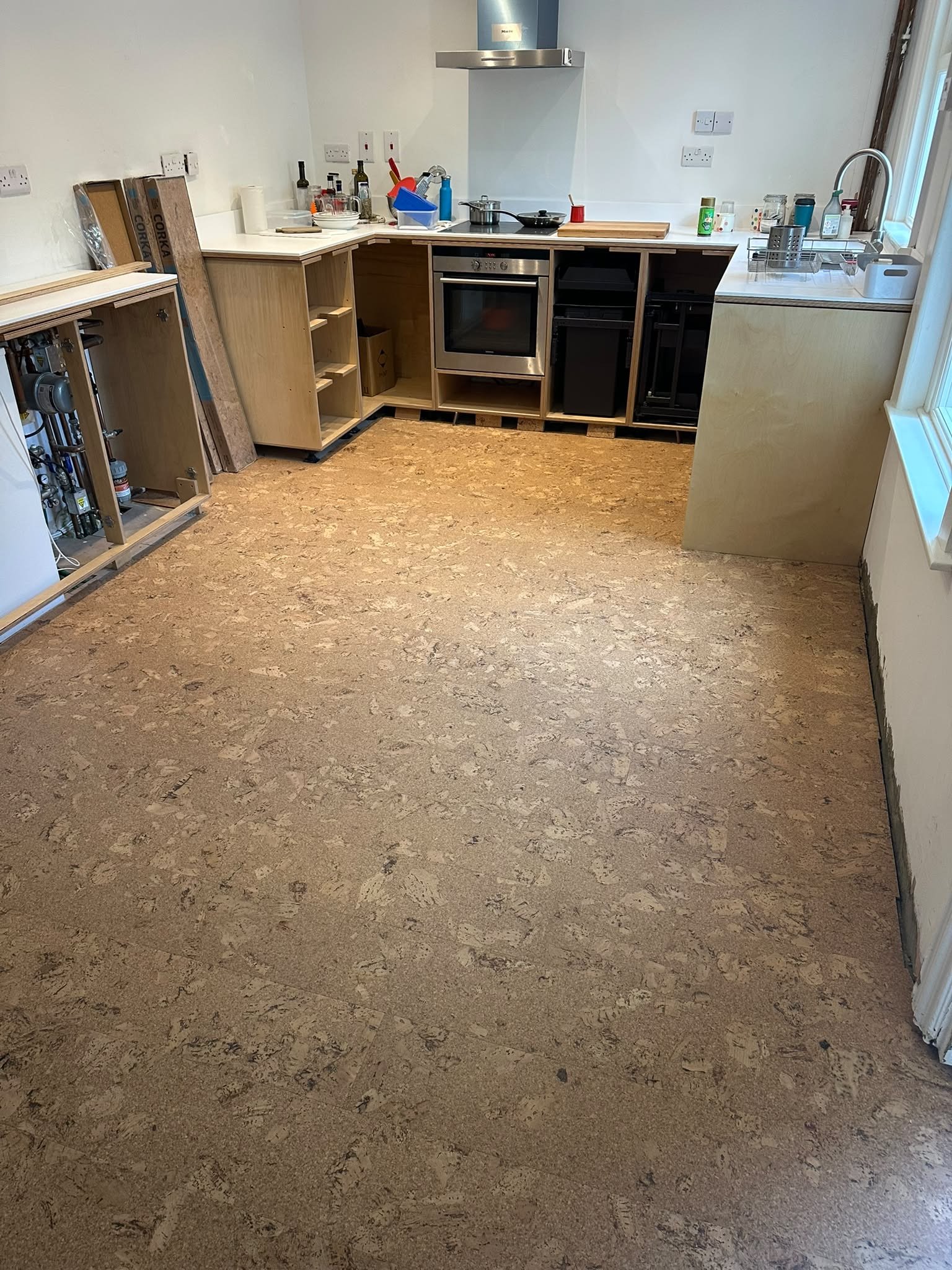
Why flats and leasehold are different
In a flat, your floor is also someone else’s ceiling. The noise that matters most is impact sound — footsteps, chair scrapes, a dropped mug — carrying down to the home below. Two things govern it:
- Building Regulations Part E (Approved Document E) sets a legal standard for sound insulation between dwellings. It applies to new flats and to conversions such as a house split into flats, and compliance is checked by an on-site test.
- Your lease. Many leasehold flats carry a clause requiring carpet, or a hard floor with “equivalent acoustic performance”, usually with the freeholder’s or managing agent’s consent. Ignoring it can mean being asked to take the floor up.
The good news: a hard floor like cork can satisfy both. It just has to be built up correctly.
What Part E actually asks for (England & Wales)
For floors, Part E is judged on impact sound — the weighted normalised impact sound pressure level, L′nT,w (lower is better):
| Type of flat | Impact sound limit (L′nT,w) |
|---|---|
| Converted flats (e.g. house to flats) | 64 dB or lower |
| New-build flats | 62 dB or lower |
There’s also an airborne-sound requirement (at least 43 dB for conversions, 45 dB new build), but that’s largely down to the structure rather than the floor finish. Crucially, Part E is tested on the finished, installed floor by an accredited acoustic engineer (pre-completion testing), or satisfied in new build by registering a “Robust Detail”. It’s the complete build-up that passes — not any one product. Scotland and Northern Ireland use their own standards.
Why cork is a smart starting point
Cork is one of the more forgiving hard floors for this. Its cellular structure naturally absorbs impact — the cork we supply through The Floor Gallery is rated around 16 dB footfall-noise reduction before any underlay — so it’s inherently quieter underfoot than tile, laminate or solid wood. Add that it’s warm, soft and comfortable, and it’s a genuinely good fit for flats where quiet and comfort both matter. More in our cork flooring guide, and our soundproofing a flat guide.
Silent Lay+ — the acoustic layer under your cork
Where extra impact isolation is needed to meet Part E, we specify Silent Lay+ beneath the cork. It’s an acoustic underlayment of agglomerated cork and recycled rubber, available in 2 mm and 3 mm, working with both glued and floating build-ups. Its published, independently tested impact-sound improvement is 17–18 dB (ISO 16251), and it’s compatible with underfloor heating.
Your clear path to compliance
- Check your position first.
- Leaseholder / flat owner: read your lease for any flooring or sound clause, and ask the freeholder or managing agent what they require — often a minimum acoustic improvement plus their written consent.
- Tenant (renting): get your landlord’s written permission before changing the floor, and ask whether a lease clause or Part E applies to the building.
- Conversion or work under Building Control: Part E pre-completion testing will apply.
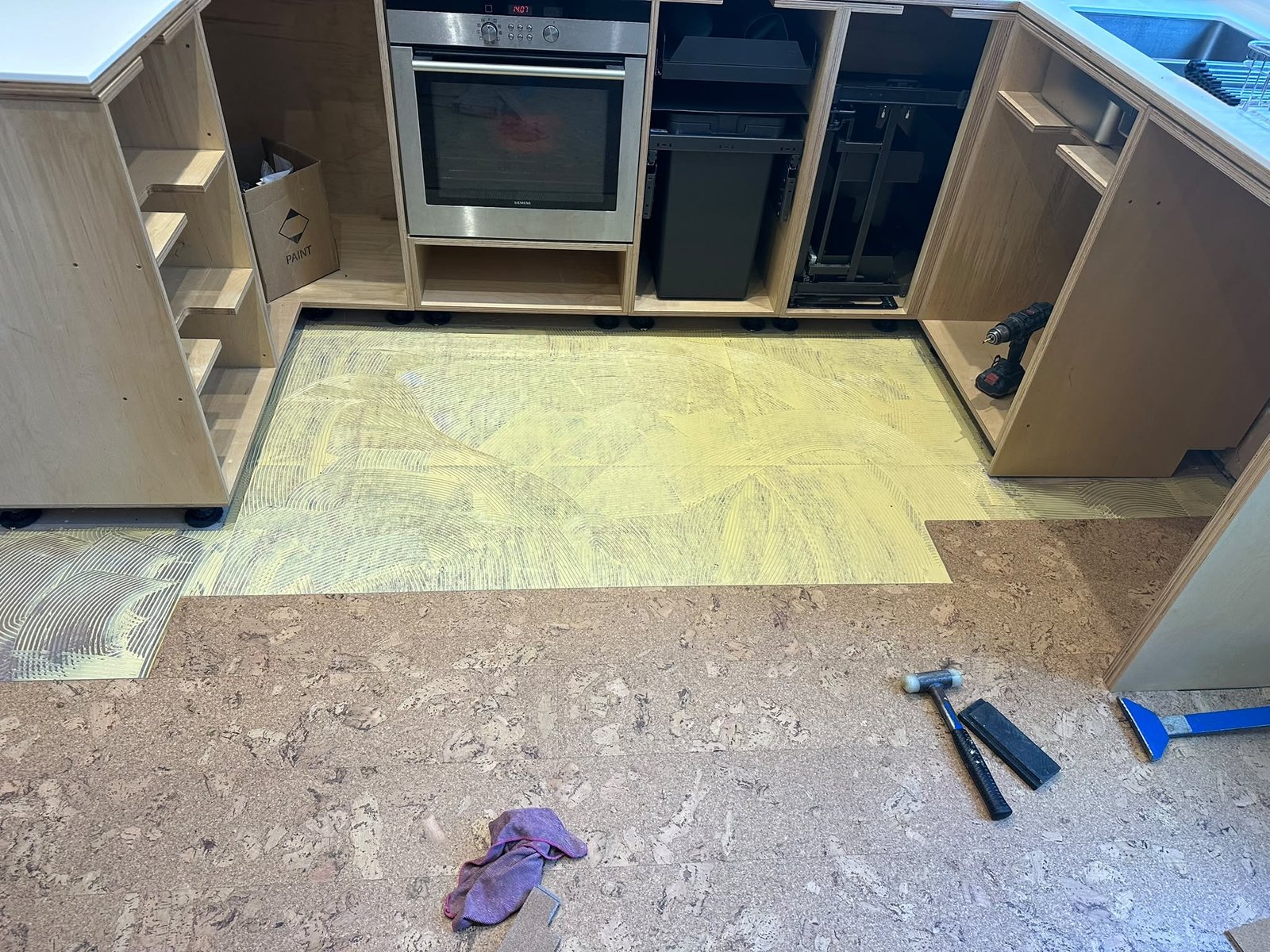
- Specify the right build-up. Cork + Silent Lay+ acoustic underlay over a sound, level, dry subfloor. We advise on the underlay thickness and preparation for your specific floor and structure.
- Test where it’s required. For work under Building Control, an accredited acoustic engineer tests the finished floor to confirm the L′nT,w figure. For a lease, that test report is the evidence that satisfies most freeholders and managing agents.
- Keep the paperwork. Hold on to the specification, the Silent Lay+ data sheet and any test certificate — your proof of compliance for the lease, Building Control, or a future sale.
Honest caveats
- Cork + Silent Lay+ is the right route to compliance, but we can’t guarantee a specific dB result sight-unseen — the existing structure (concrete vs timber), the subfloor and the build-up all affect the outcome. That’s what the test confirms.
- Any formal Part E sign-off comes from an accredited acoustic tester and/or your Building Control body. We supply and fit the compliant floor build-up; we don’t issue the certificate.
- Rules differ in Scotland and Northern Ireland.
Want cork in your flat, done properly?
Ben supplies and fits cork with Silent Lay+ acoustic underlay, prepares the subfloor to a high standard, and can talk you through the lease and testing side before you commit. Book a free home visit and we’ll bring samples and honest advice.
Common questions
Can I have a hard floor in a leasehold flat?
Usually yes — most leases allow it with adequate acoustic performance and the freeholder’s consent. The key is the right build-up and, often, a sound test. Always check your lease first.
Does cork meet Part E?
Cork with a suitable acoustic underlay such as Silent Lay+ can meet Part E — but it’s the complete installed floor that’s tested, not cork on its own. We build it to give the best chance of passing and arrange testing where it’s needed.
Do I need a sound test?
For a conversion or work under Building Control, yes — pre-completion testing by an accredited engineer. For a lease, a test report is usually the evidence a freeholder or managing agent wants to see.
Will it work with underfloor heating?
Yes — Silent Lay+ has low thermal resistance and is UFH-compatible, and cork pairs very well with underfloor heating.